
ShoeCloudBrogue

Delcam CRISPIN launches new project management system for footwear industry

0
ShoeCloudBrogue

Delcam CRISPIN has launched project management and collaboration software for the footwear industry called ShoeCloud.  ShoeCloud enables more efficient management of design and manufacturing data throughout the development of new shoe designs, either within a single company or along a supply chain.  It also makes decision making more productive by giving the right information to the right people at the right time.

ShoeCloud can be integrated within the CRISPIN range of software for 3D footwear design and manufacture.  Alternatively, for staff not directly involved in design and manufacturing, such as management or marketing departments, ShoeCloud data can be accessed though standard Web browsers and e-mail.  This versatility allows ShoeCloud to speed and streamline communications at all levels, and so lead to quicker introduction of new designs.

ShoeCloud is expected to be of most benefit for organisations that undertake design in North America or Europe and manufacturing in Asia.  By enabling easier and faster exchange of data between the two regions, detailed project management will be possible with a significant reduction in the time and cost of international travel.

ShoeCloud can store all project data in any format but works best with the CRISPIN .Shoe format.  This format contains the information required for every aspect of design and manufacturing, from the generation of the initial design through to mass production, so there is no need to manage multiple file types.  It makes data management and project planning much simpler, as well as giving greater confidence that the designer’s original intent is captured in the finished footwear.  For staff that do not use any CRISPIN software, designs of complete shoes, or of components such as patterns and soles, can be viewed as .jpg images or 3D pdf files.

Each change to the overall design, or to a single element, is stored within ShoeCloud to give a complete revision history showing who has generated the data and when.  Revision authority can be allocated as required, with staff not authorised to make changes themselves able to record comments.  Designs are locked automatically when they are removed from the vault to prevent conflicts if more than one person tries to change the design simultaneously.

Once any project has been started within ShoeCloud, tasks can be assigned to one or more team members, who receive an e-mail notification with information on what they need to do and the deadline for their part of the project.  The whole team can see a full record of the project to date, together with the tasks that are scheduled for them and for the other team members.  Managers can track the progress of each project and the level of activity that is scheduled for each team member.

This comprehensive access to project data ensures that every person involved in the project group has all the information they need in order to set their individual priorities and to participate in collective decision-making.  It also enables each person involved in a project to track exactly who is expected to do any specific task, together with both when it is due to be completed and when it is actually finished.

All workflow is recorded as the project progresses.  Thus, as ShoeCloud is used, a knowledge base is created with the full history of all projects undertaken to date.  For any project, details can be tracked of all communications, with a full record kept of all instructions given and information supplied, together with a history of who approved what and when.

This database can be searched to provide background information when starting a new project related to, or similar to, any previous contracts, for example, designs already produced for a particular customer.  As well as helping in project planning and team management, this in-depth recording also allows ShoeCloud to be used to maintain quality standards.

As a result of all the continuous communication, the number of formal meetings between footwear design and manufacturing teams can be reduced.  Actions from the meetings that are held can be logged within ShoeCloud and the people responsible e-mailed with details to ensure that they are aware of the decisions made, the work that needs to be done and the scheduled completion dates.

Most importantly, ShoeCloud allows the work that needs to be progressed most urgently to be highlighted for immediate action.  Everyone involved in the project knows exactly what tasks they are supposed to be doing and in which order of priority, so there is less chance of them being sidetracked into less important work.

For further information, or to see CRISPIN ShoeCloud in action, please email crispin@delcam.com.


ray and mark

Limbcare winner receives trophy

0

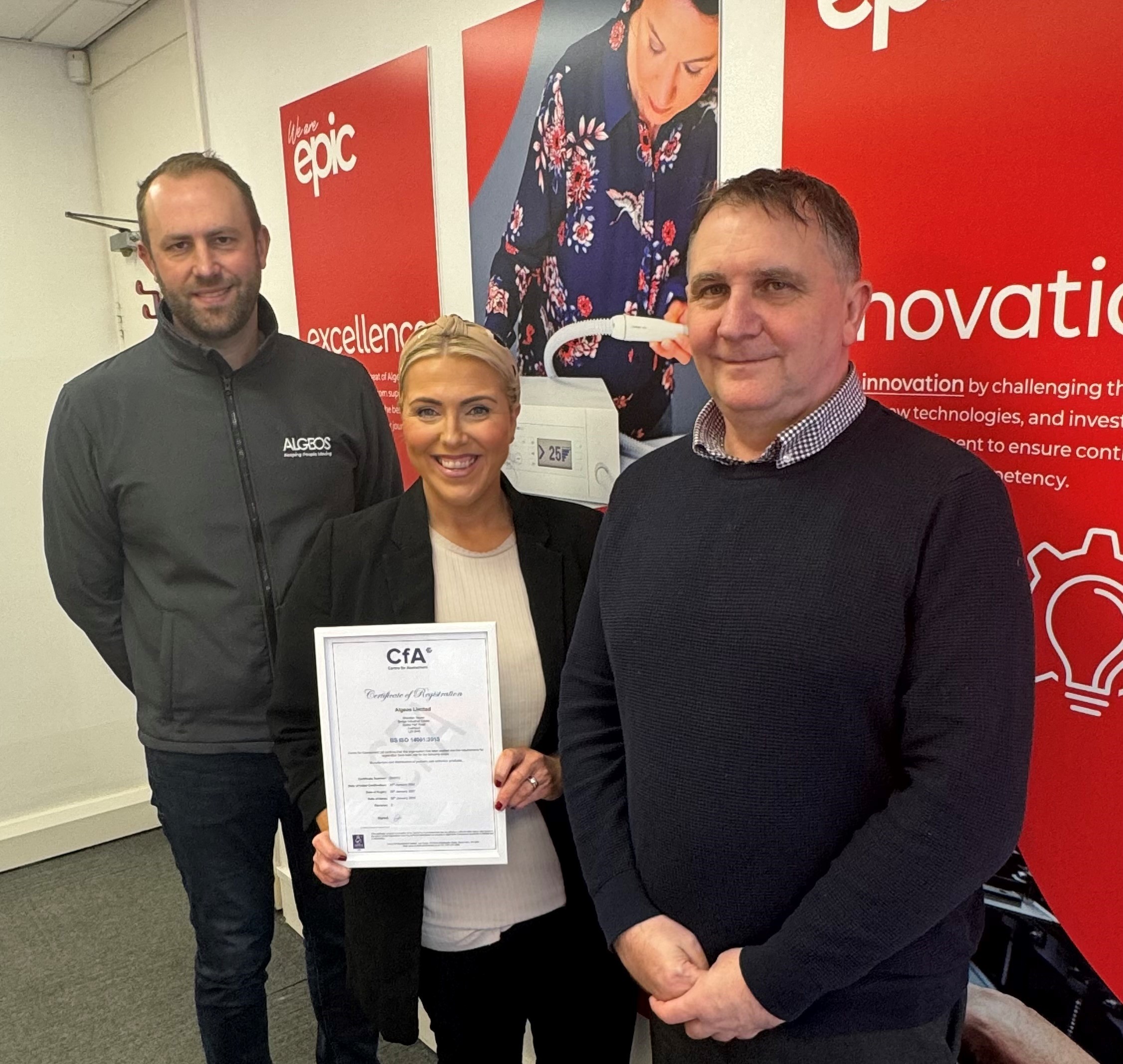
Due to the fact that the winner of the Limbcare Technician of the year award, Mark Stevens was unable to attend the BAPO Conference in Telford it was arranged that he would meet Limbcare chairman Ray Edwards MBE at the Limbcare offices to receive his cheque.  We now have a photo of Mark with Ray receiving his award.


ray and mark

image002-4

NEW vacancy for Orthotic/Prosthetic Technician

0

We have listed a new job advert with Dorset Orthopaedic.

Click to view position details >>

Bionic arm

Chinese Farmer Builds His Own Bionic Arms

0

Bionic arm

A Chinese farmer who lost both his hands in a freak accident has turned his misfortune into a family business by building his own pair of bionic arms.

Sun Jifa, from China’s northern Jilin province, lost both his hands when a fishing explosive went off prematurely in his home nine years ago.

Unable to afford expensive prosthetic arms at local hospitals, Sun bought a low-grade pair which proved near-useless for routine farm work and caring for his wife and three daughters.

Eager to get his hands back, Sun spent the next eight years crafting his own steel bionic pair from scratch with little direction but his own intuition.

The results have changed his life.

[Sun Jifa, Creator of Bionic Arms]
“It transfers power from the natural movement of my elbow into the finger, allowing it to grab and hold. This is the left hand. For the other hand, rotating the two bones that I have left in this arm allows my right hand to open and close like this.”

Sun’s hands made him a practical celebrity in his hometown and earned him national media attention.

It wasn’t long before other amputees began requesting pairs of their own.

Fellow farmer Li Yanzhong, who lost his own left hand years ago, came to Sun after he found the prosthetic replacement he bought was of little use.

[Li Yanzhong, Fellow Amputee and Customer]
“Mr. Sun’s artificial hand feels good to me. When I go home, it will help me a lot with operating work machinery. Normal prosthetic arms only have a superficial function when operating machinery. They don’t have much strength. But this artificial hand will be very useful in using machines and doing other work.”

Sun said that he has already sold around one thousand steel limbs for about 3000 yuan ($490 USD) each, which he says is only a tenth the price of what most hospitals charge for higher-quality prosthetics.

Sun’s hands aren’t just able to handle the complexities of his farm labour and shop work – they can also perform routine tasks ranging from picking up a spoon to lighting a cigarette.

[Sun Jifa, Creator of Bionic Arms]
“By using these hands, I can help the family with chores. I can do some farm work, I’m not useless. I really feel a weight has lifted. I feel I’m not a freeloader. I can be useful.”

Despite the big business, for Sun, now aged 53, perhaps the biggest benefit of his new hands is that they have brought back his confidence.
Read more at http://www.liveleak.com/view?i=1a7_1369470293#0t1MkAUahx1iwL8I.99

_67773226_array3

Nottingham student’s design inspired by friend who lost a limb

0

_67773226_array3

A student has designed an artificial limb with a changeable cover to reflect the wearer’s mood, inspired by a friend who lost a leg. Nottingham Trent University undergraduate Jonathan Bradshaw wanted to provide amputees with an affordable way of reflecting their sense of style. It followed research in which he found appearance to be as important as comfort among younger people. School friend and amputee Amy Bosley described it as “a stroke of genius”.

Jonathan’s prototype features a removable casing system which provides protection to the prosthetic leg’s internal components.It has aluminium brackets and the casing clips on and off by hand with a quick release mechanism.

The changeable covers are attached to the casing with press studs and the quick release casing allows people to change the covers with ease by avoiding the need to bend down.

The different looks can be changed in a matter of minutes and the fabric is washable.

It will go on public display at the university’s Art and Design Degree Shows at the city site campus between 31 May and 8 June.


The 23-year-old came up with the idea for a product design project after becoming intrigued by some amputees who use wheelchairs rather than artificial legs.

Read more on this here at the BBC website >>
 

banner

Patient Orthotic Group

0

While looking around the web I found this new patient group who were unhappy with their local Orthotic service so set up this group to help improve their service and it appears to have worked.  Why not have a look at their web site.

North Staffs Orthotic Campaign

We are a group of service users and their families and carers, who feel let down by the level of Orthotics Service provided at the University Hospital of North Staffordshire. Together we want to work towards improving the situation.

Click here to view their web site.

_67214572_img_9375

How a double amputee is racing a superbike at 150mph

0

_67214572_img_9375

Murray Hambro is no ordinary motorcycle racer. For a start, the 33-year-old is racing in a national championship after just a handful of races.

Secondly, he and his team are all novices.

Finally, he is a double amputee, with no legs from just below the knee.

In December 2010, Hambro was serving as a Lance Corporal in theSecond Royal Tank Regiment in Afghanistan  when his tank drove over a 65kg roadside bomb.

Hambro, who was at the top of the tank in the turret, was sent flying by the force of the explosion. So was a passenger in the tank.

“The explosion blew all the doors off and the passenger was projected out of the vehicle,” explains Hambro.

“He lost one of his legs and his spleen. I was sent 40 feet up in the air, came down and landed on my side. My injuries included breaking all the bones in my feet, breaking my pelvis, ripping my liver and spleen, six fractured vertebrae at the top of my neck, and the all-important one, I cut my nose.

“It was a pretty big one.”

The driver was also injured, suffering a broken arm and a broken ankle. “He got lucky,” says Hambro.

First on the scene was a colleague from the vehicle directly behind.

“He leapt out and did the whole Baywatch thing,” Hambro recalls. “Running in slow motion through the dust and dirt.

“He gave me first aid and just sorted me out. He told me not to look at my legs and made sure I got out of there alive.”

Hambro gave his son Harley, who was born in March 2013, the middle name Nicholas, after the friend who risked his life to give him that first aid.

After being evacuated under fire to Camp Bastion in Helmand Province  and then being transported on to the new Queen Elizabeth Hospital in Birmingham, Hambro remembers the feeling of relief when he was told by a consultant he had fractured both feet in the explosion.

“I was happy with that,” he says. “I thought: ‘Well, a bit of plaster for maybe six to eight weeks and I’ll be up and about again.’

“But then he said: ‘The right one is a no-brainer, it’s got to come off. We could try to rebuild the left but you will be in and out of hospital for the next two to three years and the end result could be you lose it anyway.’

“So I thought: ‘While they’re at it they may as well have both feet.’ Within 48 hours of getting to hospital, I was a double amputee.”

The naturally optimistic Hambro admits having “a few bad days” coming to terms with losing his legs. After 11 years in the army, he was facing an uncertain future but was determined to walk again by August 2011, in time for his wedding.

In fact, he managed to take his first steps by the end of February, just three months after his double amputation.

He was back out on the roads on a newly-modified motorbike by April of that year, against the advice of his surgeons.

“After my operation, the surgeon asked me what my hobbies were,” he remembers. “I told him: ‘I ride motorbikes.’ He looked at me and told me to get a new hobby.”

But Hambro, who had started riding motorbikes at the age of seven in fields near his home, was not to be deterred. After a particularly bad day of pain and discomfort, he treated himself to a new Triumph motorbike.

He did not know if he would even be able to ride without legs but set about finding out.

The rear brake, which is normally operated by the right foot of a motorcyclist, is now housed on the right handlebar and is controlled by Hambro’s thumb.

The gear lever, usually operated by a rider’s left foot, has been replaced by up and down shift buttons on the left handlebar. A similar system is used on Hambro’s race bike.

Moving about on the bike was the biggest problem, as he found his feet were slipping off the footpegs. So he drilled a hole in his boot to allow him to ‘attach’ it to the bike. That helped a lot.

Being back on the road was an important step in proving that his disability would not prevent him leading the life he wanted to.

“I was nervous the first time I went out on the road,” Hambro says. “I didn’t know what to make of it.

“But my family were just as keen for me to get out on the bike as I was. My wife and I used to go out together a lot before, with her on the back, so to be able to do that again was great. She loves it. It gave us some normality back.”

After getting married, Murray was introduced to Phil Spencer, who asked if he would be interested in joining his race team, True Heroes Racing.  Hambro had never ridden competitively before.

The team is run in association with theAfghan Heroes charity  , which was set up by Denise Harris, the mother of a soldier killed in Afghanistan, and aims to help wounded service personnel who have returned to the UK.

Despite admitting that they had no real idea what they were doing, Spencer and Hambro managed nine weekends of club racing last year before securing a place in this season’sTriumph Triple Challenge,  a support class in the British Superbike championship.

“My first race was very daunting,” Hambro admits. “I still had my road riding head on, guys were coming up to lap me and I was just pulling over and letting them through.

“I didn’t know what to expect to be honest. I then got chatting to the other racers and they told me I had to be more aggressive and hold my lines. So I adopted that philosophy and stuck to it.

“Overtaking my first rider felt like a race win.”

This season has not been straightforward for True Heroes Racing. They have suffered technical problems, struggled to set up a new bike after it arrived late, while Hambro slid into a tyre wall at Thruxton  after an 80 mile-per-hour crash.

He has approached all these obstacles with the same black humour. After all, this is a man who has “LEGLESS” embroidered on the back of his race leathers and a tattoo of himself being blown up on his back. He also has a personalised number plate that spells out “No Feet” on his car.

When he says he doesn’t do “self-pity”, he certainly means it.

True Heroes Racing are already looking to expand next season and hope to be able to help other injured serviceman who are coming through rehab get a new lease of life.

“My job used to involve people throwing grenades at me. so I guess it makes racing less scary,” Hambro says.

“I still get nervous on the track but you’d be crazy if you weren’t. I know that nothing serious will happen to me. The worst-case scenario is a broken bone or two.”

He says his naturally positive mindset and “sick” sense of humour have been key in adapting to his new life.

“In Afghanistan, everyone is out to kill you so it’s a different ball game altogether,” he says. “There are low points, days when it is painful and you struggle to get up and think: ‘Why isn’t this working?’ But I don’t have too many.

“If I feel like I’m having a bad day, then I do something to cheer myself up. The team name is True Heroes, but I don’t consider myself a hero at all. If anything, I was stupid enough to get blown up.”

bassett

Orthotic Workshop Manager Post

0


bassett

We have listed a new job advert for an Orthotic Workshop Manager at Doncaster & Bassetlaw Hospitals NHS Foundation Trust

Please click on the careers tab to see the advert.


UPGRADE7

New Look to the Website

0

You may have noticed that we have updated the look of the web site hope you enjoy the new look.

Uganda-Trip

Uganda Project

A group of Orthotists from around the UK have got together with a team from Nottingham University to set up a voluntary rehabilitation project in Uganda.

Algeos has been a loyal supporter of the Uganda Polio Project from day one, generously donating materials, tools and other essential items to enable the success of the trip.

Over the course of the last 2 week trip to Uganda over 500 patients were seen by the 6 Orthotists and 1 technician who gave up their time to enable the project. Uganda is one of the poorest nations on earth, disease and disability is common place, provision of healthcare is inconsistent and beyond the reach of most Ugandans. This results in those with the greatest need being left without access to healthcare or rehabilitation provision.

Along with material and tools, the team have collected used orthoses from throughout the UK. These have been packed up and shipped out to Uganda in anticipation of the clinical teams arrival in June.

This year the project has expanded to 9 clinicians and 2 technicians, with the aim of treating double the number of patients. This project is only possible thanks to our generous supporters, every penny of donations be they financial or physical consumable are used directly to support those in the greatest of need.

Full details of the project can be found at: ugandapolioproject.com

Go to Top